Monday, May 16, 2011
FICTION ROCKS and RULES---Part One
I haven’t been blogging for awhile because I’ve been writing like crazy. However, I’ve been feeling the tug of getting back to it, reaching out to all of you—my friends in the writing world--somewhere out there in cyberspace.
I'm sure you're asking, "What have you been writing?" I'm writing novels and that’s what I want to share in this next series. It'll be quite different than my Writing Non-fiction series. That was drawn from nearly thirty years of writing experience.
This time I'm sharing where I am now--looking to what I want to be publishing in the future, specifically romantic suspense and YA (Young Adult—which in my opinion is way more adult than it used to be).
Have I published in either of these genres?
Yes, my YA novel The Fledglings was published by Delacorte Books for Young Readers in 1992 and reprinted in paperback by Boyds Mills in 1998. Happily, it won two awards. So I’ve tested the waters and long been interested. I simply haven’t had the opportunity in my career—or taken the time, depending on how you want to look at it—to jump in and swim.
I’m telling you this because I want you to understand that I’m going to be sharing with you what I’m discovering myself about the craft of writing fiction. Make no mistake, it is a craft and like any other it takes practice and effort. Above all, it requires a passion to succeed that will carry you past the rejections with the courage to revise or start fresh, but definitely to keep on writing.
So I've learned there are rules to writing fiction and that's what I want to share first. Let's start at the top.
Rule #1: To write it you have to read it.
Each genre has its own specific style and certain aspects of “what’s expected.” That has also changed over time.
You only have to read a Dashiell Hammet mystery, such as his famous Maltese Falcon, published in 1930, and a book by a current mystery writer like Lynda LA Plante’s Blind Fury to see what I mean.
Pick your favorite authors for your favorite genre and read, read, read, read, read. Let it be fun, but pay attention to things like: how was the story set up to hook you into the book, when and how were the protagonist (hero/heroine) introduced, when and how was the antagonist (bad guy/gal) introduced, how did the plot unfold.
This is a good spot to stop and make a list of your favorite authors in your genre. And by the way, pick one genre. It’s like non-fiction where publishers won’t buy a book that can’t be plugged into the Dewey Decimal System categories.
You have to be able to tell a publisher your book is romantic suspense or paranormal or dystopian, sci-fi, or whatever. Looking down the road, that will also help you know what publishers are likely to be interested in publishing your work when you're ready to pitch your book.
Different publishing imprints only publish certain genres. And don’t worry there are plenty of on-line sites that will tell you which genres each publishing imprint features.
There we have Rule #2: Choose a genre and focus on it.
One more rule for today and it’s a big one.
Rule #3: Come up with a big idea for your book.
It’s best to be able to put that idea in the form of a question.
For example, “Will a group of adults and two children be able to survive until a storm passes and they can be rescued from an isolated island that’s been overrun with all kinds of living dinosaurs?”
Did you recognize this as the idea for Jurassic Park?
You need an equally fresh idea and one that’s likely to capture the attention of a lot of readers.
Make lists of the blockbuster books that have become movies, such as The DaVinci Code, Pirates of the Caribbean, Fatal Attraction. Let your list grow and grow. Then analyze it. What were the big ideas?
Next, start a list of your own. What's out there that grabs your interest and could capture an audience?
Could you spin a story around that idea? One with characters readers can care about?
By the time you--and I--get that far, we'll be ready to roll on to plotting. That part of writing fiction has rules of its own.

I've got to go write because I hear my characters talking to each other in my head. Which goes to show, if you hear voices, you're not crazy, you're a fiction author.
I'll be back soon.
Wednesday, April 13, 2011
DIG INTO INSECTS BIGGEST! LITTLEST!
Hello teachers and parents! My next few blogs are especially for you to help you share my books with children.
For those of you interested in writing non-fiction, please use these blogs as an opportunity to dig into my books and check out how I combine language and pictures to make learning exciting, involving, and as interactive as possible. Then, coming soon, will be some new blogs just for you.
First, let's dig into INSECTS Biggest! Littlest! (Boyds Mills, 2009)
Look on page 2 to see a female Pea Aphid and her babies. How many babies are there? How tiny are they?
You might be surprised to learn aphids are born alive. Look at the picture (below) from Creepy Crawly Baby Bugs Creepy Crawly Baby Bugs (Walker, 1996).
The mother aphid keeps her developing young safe by holding the eggs inside her body until they hatch. Then the young emerge ready to fend for themselves.
Can you eat like a Hummingbird Hawkmoth? Look on page 12 to see how the Hummingbird Hawkmoth drinks nectar, sweet liquid produced by flowers. How does it help the moth to have an extra-long proboscis, straw-like mouthparts?
Look at the honeybees on page 21. Are honeybees careful to stay away from other honeybees? Their behavior is related to the fact honeybees depend on each other to do a big job: warm up or cool off their hive (home). Think what your body does when you get chilled? You shiver. So do bees. Each shivering bee gives off a tiny bit of heat. Whenever the temperature drops below about 55F/13C outside, the shivering honeybees group together in a ball around the queen, the female bee that producing eggs. The colder it gets outside, the tighter the bees huddle. Even when it’s below freezing, the center of the bee cluster is likely to be about 90F/32C.
Now wave your hands in front of your face. Feel the cool breeze? No wonder lots of bees fanning their wings can cool the hive. They definitely need to keep the hive from getting too warm. The wax forming the cells inside the hive will soften if the temperature gets warmer than 93.2F/34C.
Check out the wasp’s paper house on page 23.
The following activity from What Happens Next?(Longstreet, 1995) will let children make paper and see how wasps change bits of wood into their building material.
1. Tear 20 sheets of newspaper into tiny pieces. Soak in a bowl of water overnight.
2. Cover your work area with newspaper and a stack of three paper towels.
3. Have an adult cut a 5 inch/13 centimeter square of window screen (available at hardware stores). Use scissrs to cut waxed paper squares the same size.
4. Pour two cups of water into a blender. Add a cup of wet paper and a tablespoon of cornstarch. Blend until it looks like a gray milkshake. Pour into a clean bowl. Push the screen into the bowl until it’s covered with mush and lift straight up.
5. Top with waxed paper. Flip, waxed paper side down, onto the towels. Cover with three more paper towels.
6. Use a rolling pin to squeeze out water. Remove the wet towels and screen.
7. Turn over onto a dry paper towel, peel off the waxed paper and let dry. Repeat to make more paper.
These highly magnified views from What Happens Next let you compare man-made typing paper and wasp paper. In what ways do they look alike? How are they different?
Now, go on a bug hunt. The following insects are pictured in INSECTS Biggest! Littlest! Find them. Check out how being big or little or having big or little body parts makes all the difference in their lives.
Aphid
Stick insect
Weevil
Stalk-eyed Fly
Toothbrush Caterpillar
Raja Brooke Birdwing Butterfly
Saturday, March 26, 2011
WRITING DOCUDRAMAS—Part Two: How-To Tips
And now for those “how-to” tips I promised.
First, remember today’s readers are used to watching stories unfold as they happen. You’ll need to make your readers feel they’re in the middle of the action you’re sharing. I always write a docudrama with the “at the top of the news” approach. So I share firsthand interviews with the people who experienced the action. I also include supporting stories that provide background information: what caused the event and what or who made the outcome happen.
Producing a docudrama happens in four stages:
1. Finding just the right story to tell and deciding what supporting stories to include.
2. Tracking down the people who lived the action and those who can share the supporting stories.
3. Locating “WOW” images to bring the story to life
4. Writing the story and finding just the right way to meld photos and text.
A docudrama book may tell a single real-life story. Mine usually share a number of stories that all have a common theme. For example, in my book ANIMAL HEROES: TRUE RESCUE STORIES (Millbrook/Lerner, 2009). There are nine short stories, each telling the story of one animal that helped people survive a life-threatening situation, like how Winnie the cat saved her family.
My research for docudramas, like POWERFUL MEDICINE: FAULTY HEARTS: True Survival Stories (Lerner, 2011), is on-going. I avidly read newspapers, journals and magazines, and do all sorts of on-line research on various topics that interest me. I keep a file of these story ideas. When a theme emerges for a book, I dig out any stories I’ve already collected and then search for even more.
Next, I become a detective to track down and interview the people whose stories the docudrama will share. In RESCUES! (Millbrook/Lerner, 2006), a book sharing the stories of people who put themselves in harm’s way to help others, I interviewed both the victims and the rescuers to share both sides of each story. For example, the chapter “Nine Miners Trapped!” shared the story of nine miners who were trapped in a coal mine in Pennsylvania. I interviewed one of the miners, Randy Fogle to share what it was like being trapped underground, waiting to be rescued.
I also interviewed civil engineer Sean Isgan whose job was to find the one spot in a huge field where drilling a rescue shaft 240 feet into the ground would reach the trapped miners. The main supporting story for “Nine Miners Trapped!” explained how a Global Positioning System (GPS) unit works and how this technology helped Sean Isgan decide where to drill the rescue shaft.
Finding people you want to interview can be a challenge. I often locate people by finding out where they work and organizations they belong to. When you contact the person, it’s important to explain how the interview will help share valuable information with readers. For example, each of the stories in RESCUES lets children discover how science and technology helped people survive and brave people save the lives of others.
Before I do an interview, I always do my homework so I have an overview of the situation and can ask relevant questions. I sometimes visit a person and talk with them. However, because I interview people around the world, I more often do a phone interview. Either way, it's important to talk to the person. It's the only way to hear their emotions.
I always follow up with a thank you note. And, whenever possible, I share what I’ve written before I submit my book to the publisher so the person can review their story and check the facts.
The people you interview are the first sources to check for photos. For example, when I was writing POWERFUL MEDICINE: SHATTERED BONES: True Survival Stories (Lerner, 2011), Blake "Bilko" Williams supplied photos to help tell his story. While hanging suspended from the handlebars of his motorcycle during a backflip, he lost his grip and fell, landing on his feet. He was so high that it was like jumping off a two-story building. The rest of the story is what happened to his leg and ankle bones and how doctors and the latest technology helped him recover.
Expect that either you or your publisher will need to pay for permission to publish the images included in your docudrama. This cost and the rights to be granted, such as North American Only versus World Rights, are points you’ll want to consider and, discuss at the time you sign a contract for your book. In other words, you can tentatively find what photos are available but don’t commit to including any images until the book is definitely going to be published. Photo stock agencies are another possible source of pictures, although they will generally be more expensive.
Once you have completed your interviews and have at least a general idea of what images will be available to share the action, you’re ready to write. Like any good reporter, you’ll share the four W’s:
What happened?
Who was involved?
Where did it happen?
Why did the event happen? And why was the outcome possible?
I also like to include one more W.
What's happened to the people since the event?
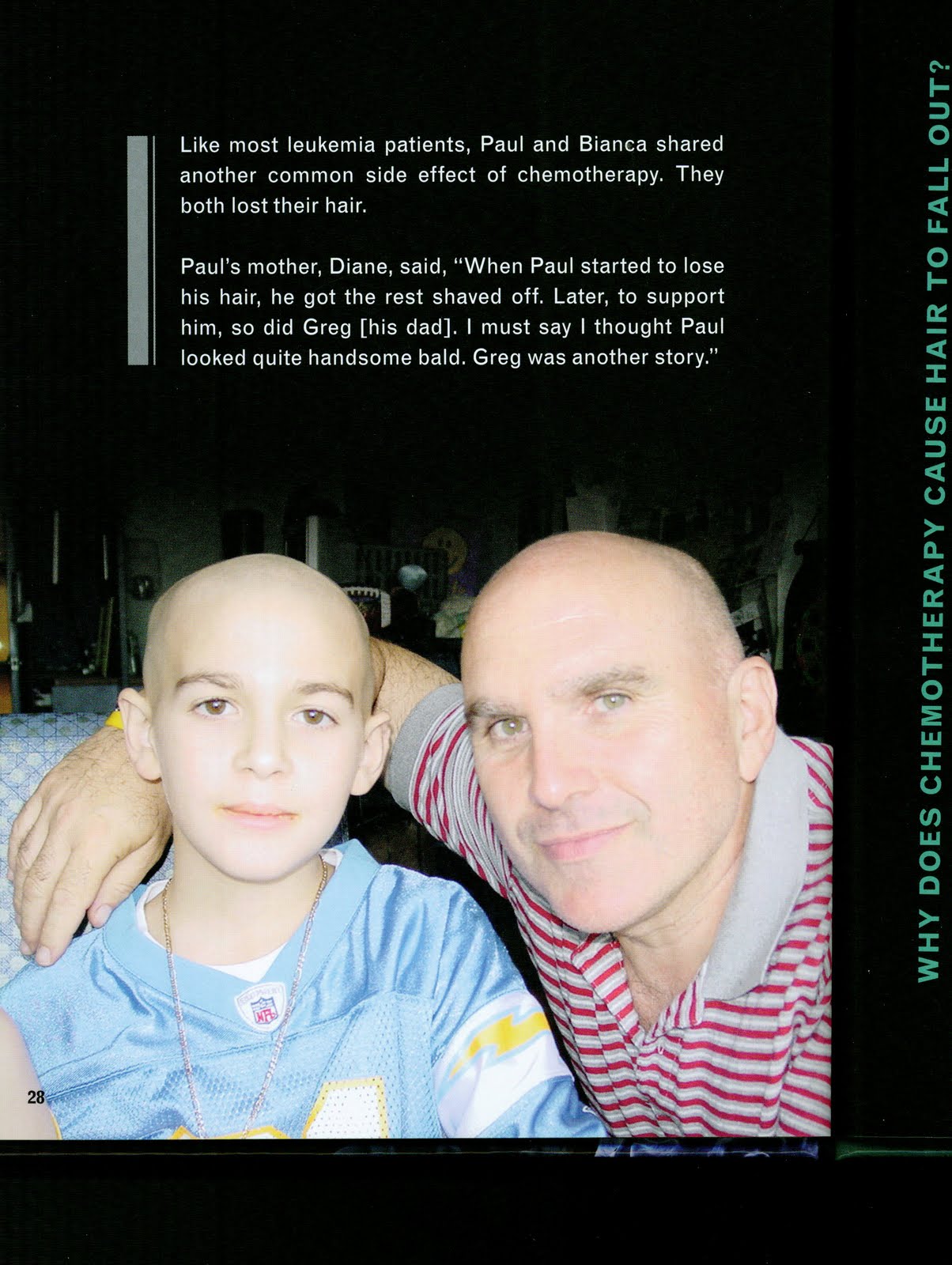
A good example is POWERFUL MEDICINE: LEUKEMIA: True Survival Stories (Lerner, 2011. One of the two docudramas in this book shares Paul Luisi’s struggle to survive leukemia.
Paul tells what it feels like to have leukemia.
Paul’s mother Diane shares what it was like to learn her child had leukemia and how the entire Luisi family rallied around Paul during his chemotherapy. His dad even shaved his head when Paul lost his hair during chemotherapy.
Dr. Judith Marcus, Paul’s doctor, explains why Paul also needed to receive a blood-forming stem cell transplant, how it was determined his brother Nicholas could supply this, and how the stem cell transplant was accomplished.
The book has a happy ending, sharing how Paul’s leukemia is in remission. He’s now a healthy high school student and enjoying playing football. I continue to get emails from Diane Luisi with updates on Paul. One of my favorite parts of writing docudramas is that I continue to hear from some of the amazing people I interview.
Here’s one final tip—allow yourself plenty of time to produce a docudrama. You’re going to talk to interesting people and go behind the scenes of real-life action. While working on SHATTERED BONES, I had the chance to go behind the scenes at the Crusty Demons motorcycle stunt show and interview Bilko Williams about his past injury. While working on FAULTY HEARTS, I had the opportunity to put on scrubs and in the operating room observing open heart surgery. Writing a docudrama is a special experience, but it takes time. So give yourself plenty of time to enjoy the research and the writing process.
Saturday, March 12, 2011
WRITING DOCUDRAMAS—Part One: I Survived
Another way I love writing non-fiction is to share a docudrama, telling a real story as if you were reporting from the scene, and including quotes from the people involved in the action.
As I thought about creating a blog with how-to tips on writing docudramas, I had no idea I was going to have my own story to tell. I’ll start with my story, my survival of the Christchurch earthquake, and then, in a second blog, I’ll share my how-to tips.
At 12:51 on February 22, 2011 a 6.3 magnitude earthquake struck Christchurch, New Zealand. It was shallow--less than three miles deep--and for all those people going about their lives on the earth’s surface, it was world-changing.
Reporters said the dust from the collapsing buildings and whole hillsides exploding could be seen for miles. I don’t doubt it. But, at the time, dust was the farthest thing from my mind. I was in Christchurch when the earthquake struck. All I was thinking about was staying alive.
I’d already been through the September 4, 2010, Christchurch earthquake. It was as different as night and day from this one. For one thing, its epicenter, the point where sections of the earth slid past each other, was about thirty miles away and about ten miles deep.
That quake also happened in the early hours of the morning when most people were home in bed. That time, I awoke to a roar like a violent windstorm.
Then the house began to tremble and the shaking became increasingly violent until it again slowed and, finally, stopped. It was scary, and some buildings were destroyed, but no one died. Along with everyone else who lived through that quake, I thought, “Well, I’ve lived through the big one. Thank heavens my house only suffered minor cracks, and my husband and I are safe.”
Four months on, Christchurch was in recovery mode. The rubble had pretty much disappeared and new buildings were springing up. The fact that a few streets still had residents living with port-a-potties was considered absolutely outrageous. After all, the earthquake was an event for the history books—over and done.
An earthquake was definitely the farthest thing from my mind on February 22nd. My girlfriend was here visiting from out-of-town, so we went out to lunch at one of my favorite Christchurch restaurants. We ate sandwiches and laughed a lot. Then our after-lunch coffees arrived, I picked up my cup, and the restaurant exploded. Everything in the restaurant was instantly shrapnel. Food and dishes launched and smashed. Tables and chairs launched and crashed. People were airborne, screaming, falling, gasping, landing, crumpling. Windows shattered.
I’ve been told the quake only lasted twenty seconds. It felt like hours. It’s hard to believe so much damage could happen in only twenty seconds. Just around the corner from me—less than half the length of a football field away—part of the front of the two-story shopping mall crashed onto the sidewalk, seriously injuring a number of people and crushing a mother and her baby.
Less than a mile away, in the very center of Christchurch, tall buildings pancaked down and parking garages collapsed. In just one-fifth of a minute, 750 buildings became rubble.
The iconic Christchurch Cathedral’s bell tower tumbled into a heap.
The fabulous stained glass windows of Knox Centre Church were reduced to bits.
Two city buses lay crushed under heaps of bricks, power lines snapped, school buildings cracked, bridges split, and flat roads were transformed into roller coasters.
Besides that damage in the center of the city, in surrounding suburbs, 100,000 homes suffered significant damage and 10,000 more were completely destroyed. Many people were seriously hurt. Nearly two hundred people died.
But I didn’t know the extent of the damage surrounding me when I fled the restaurant while the earth was still jerking with strong aftershocks. I only knew the nightmare wasn’t over, and I wasn’t yet safe. The world around me was chaos. Piles of shattered glass sparkled in the sunlight outside buildings like weird snowdrifts. Confused people staggered into the street and ambled aimlessly.
Others sat on the curb weeping. Still others, like my girlfriend and I hugged, and hurried toward the parking lot. We skirted bubbling gray mud spouting from cracks in the ground, but the mud was everywhere. The going was difficult. It was also hard to hear—hard to think—over the sounds of chaos and the shrill blaring of many sirens.
The drive home that normally took forty minutes took four and a half hours that day. Aftershocks repeatedly rocked the car. An especially strong aftershock briefly had the car airborne. Again, that event probably barely lasted a second but it seemed much longer. Time was strangely out-of-whack in this alien world.
My girlfriend came home with me. Her husband and their two sons and their families arrived at my home later that night. I was blessed that my home again suffered very minor damage and we had electricity, clean water, and working toilets to share. We settled down to a surreal existence that became a struggle to obtain supplies that were in short supply. It was nearly a week before our visitors could safely go home or on to other families living outside of Christchurch.
Have I now actually survived the big one? I hope so, but, like everyone else who lives here, I’m not so sure. Japan’s major quake just a few weeks later fuels my uncertainty.
I haven’t been back to the city since the quake. Some parts remain sealed off, but I haven’t been back mainly because I’m not ready to see that the pictures of the destruction are real. The city I loved no longer exists.
I will never forget the first time I saw Christchurch just after Christmas in 1996. I’d flown in from Atlanta, Georgia late at night and gone straight to my hotel. The next morning as the summer sun rose bright and hot, I walked across a bridge, over a beautiful meandering river, and into the city. I felt like Dorothy in the Wizard of Oz, opening the door from her black and white world into the spectacular, brilliantly colored world of Oz.
I believe those that say Christchurch will be even better when it’s rebuilt and that it will become a city of the future. But I admit to feeling grief over what’s been lost—people who will forever be missed and a city made up of the most amazingly beautiful buildings. Sadly, for now, much of Christchurch is rubble from which winds stir up dust and memories.
Subscribe to:
Posts (Atom)
CREEPY SPIDER FUN!
Can You Solve The Mysteries? The spiders below have been divided into 2 groups--those that alike and those that are different. What makes ...
-
I'm a redhead And I'm proud of it. In fact, being a redhead is a big thing in my family. I have redheaded cousins and a redhe...
-
WHAT IF YOU HAD!? SHARE-A-THON Thank you to all you creative people who are finding COOL ways to turn my WHAT IF YOU HAD!? books in...
-
Frogs of the world need you to be a science detective and help solve a scientific mystery. Scientists investigate real world problems and ...